100+ AI citation statistics for 2026: what ChatGPT, Gemini, Claude and Google AI cite, and why earned media wins (Updated October)
Natia Kurdadze
Lead UX Strategist

Ask ChatGPT to name the best tools in your category. If you’re not in the answer, the 40 blog posts on your site didn’t count. Buyers now build shortlists inside AI answers, and those answers lean on what credible outlets say about you.
Every figure below comes from the organization that collected it: citation studies, analytics platforms, buyer surveys and earnings reports. Each source was checked on 21 and 22 October 2026. To see what earned coverage looks like in practice, here is a Diptell placement in USA Today.
Key takeaways
Earned media accounts for 84% of AI citations across ChatGPT, Claude and Gemini, while paid and advertorial content makes up 0.3%. Coverage, not ad spend, is what shapes how AI describes a brand. (Muck Rack, May 2026)
Branded web mentions show the strongest correlation, 0.664, with brand visibility in Google AI Overviews across 75,000 brands. Being talked about across the web tracks AI visibility more closely than any link metric Ahrefs tested. (Ahrefs, May 2025)
26% of brands have zero mentions in Google AI Overviews. A quarter of brands are invisible in the answer layer, which is a gap competitors can take. (Ahrefs, May 2025)
51% of B2B software buyers now start their research with an AI chatbot more often than with Google, up from 29% a year earlier. The shortlist is increasingly built inside a chat window before a buyer ever visits a vendor site. (G2, 2026)
85% of B2B software buyers think more highly of a vendor when an AI chatbot mentions it in a recommendation. An AI mention works like a third-party endorsement at the moment of choice. (G2, 2026)
AI and LLM referrals converted to sign-ups at 1.66%, against 0.15% for search and 0.13% for direct traffic, across 1,200+ publisher sites. AI sends fewer visitors, but they arrive further along in their decision. (Microsoft Clarity, 2025)
AI referrals account for 1.08% of all website traffic across 10 industries, and 87.4% of that comes from ChatGPT. The click is small; the influence on what buyers believe before clicking is the real prize. (Conductor, November 2025)
What AI engines cite
Earned media and brand-managed sources dominate AI answers, but which one wins depends on the question. These numbers cover what gets cited, which sources lead, and how steady the pattern is.
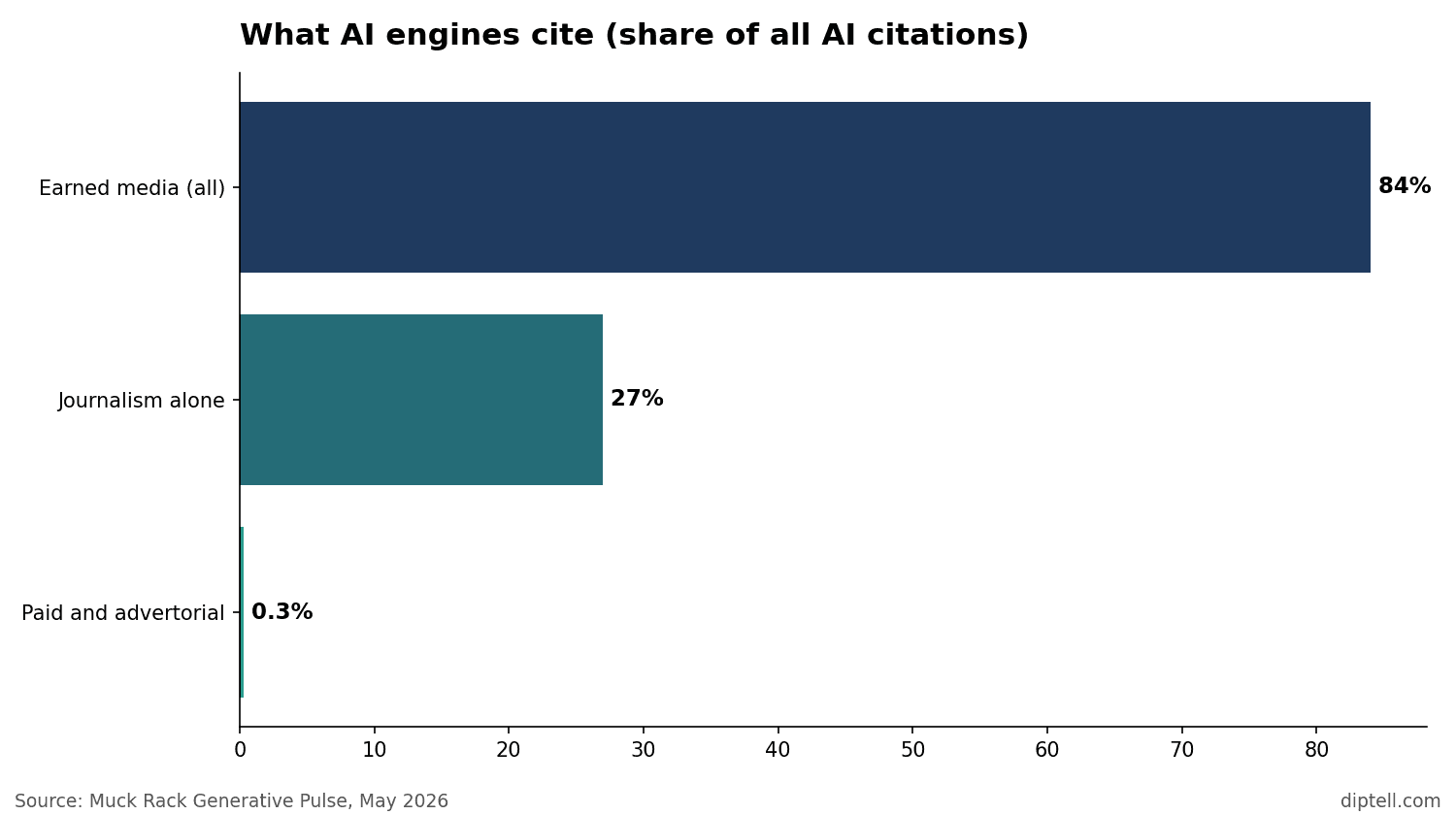
Figure 1: What AI engines cite, share of all AI citations. Source: Muck Rack
Earned vs paid vs owned
Earned media accounts for 84% of AI citations across ChatGPT, Claude and Gemini. If AI answers are where buyers start, coverage in real publications is the input that shapes those answers. (Muck Rack, May 2026)
Paid and advertorial content makes up just 0.3% of AI citations. Sponsored posts barely register as sources, so buying ads does little for how AI describes a brand. (Muck Rack, May 2026)
Journalism alone accounts for 27% of all links AI engines cite. News outlets are the single largest category inside earned media, across more than 25 million analyzed links. (Muck Rack, May 2026)
86% of 6.8 million AI citations in Yext’s study came from sources brands own or manage, such as websites, listings and reviews. Yext tested location-based questions, so for local and service queries your own pages and listings matter as much as press. (Yext, October 2025)
Which sources lead
First-party websites produced 44% of citations, listings 42% and reviews or social content 8%. Owned pages and directory listings carry local and factual queries, which makes keeping them accurate a visibility task. (Yext, October 2025)
First-party websites and local pages made up nearly 60% of citations for unbranded objective queries. When a buyer does not yet know your name, clear factual pages on your own site are how you get introduced. (Yext, October 2025)
Listings such as WebMD and Vitals supplied 52.6% of healthcare citations. In regulated categories AI leans on trusted directories, so third-party profiles need the same care as the website. (Yext, October 2025)
First-party websites supplied 47.6% of retail citations and 48.2% of finance citations. In retail and finance, structured brand pages are the most cited source type, which rewards clean product and rate information. (Yext, October 2025)
How steady the pattern is
About 94% of links cited by AI came from non-paid sources, and 82% from earned media, in December 2025. Across editions six months apart the earned share barely moved, which makes coverage a durable AI strategy. (Muck Rack, December 2025)
51% of AI answers that cite Reddit also cite a journalistic source. Community threads get grounded with reporting, so coverage travels with the conversation rather than competing with it. (Muck Rack, December 2025)
AI platform citation and usage statistics
Each assistant cites differently and holds a different share of attention. These numbers cover citation habits, platform reach, and where AI referral traffic actually comes from.
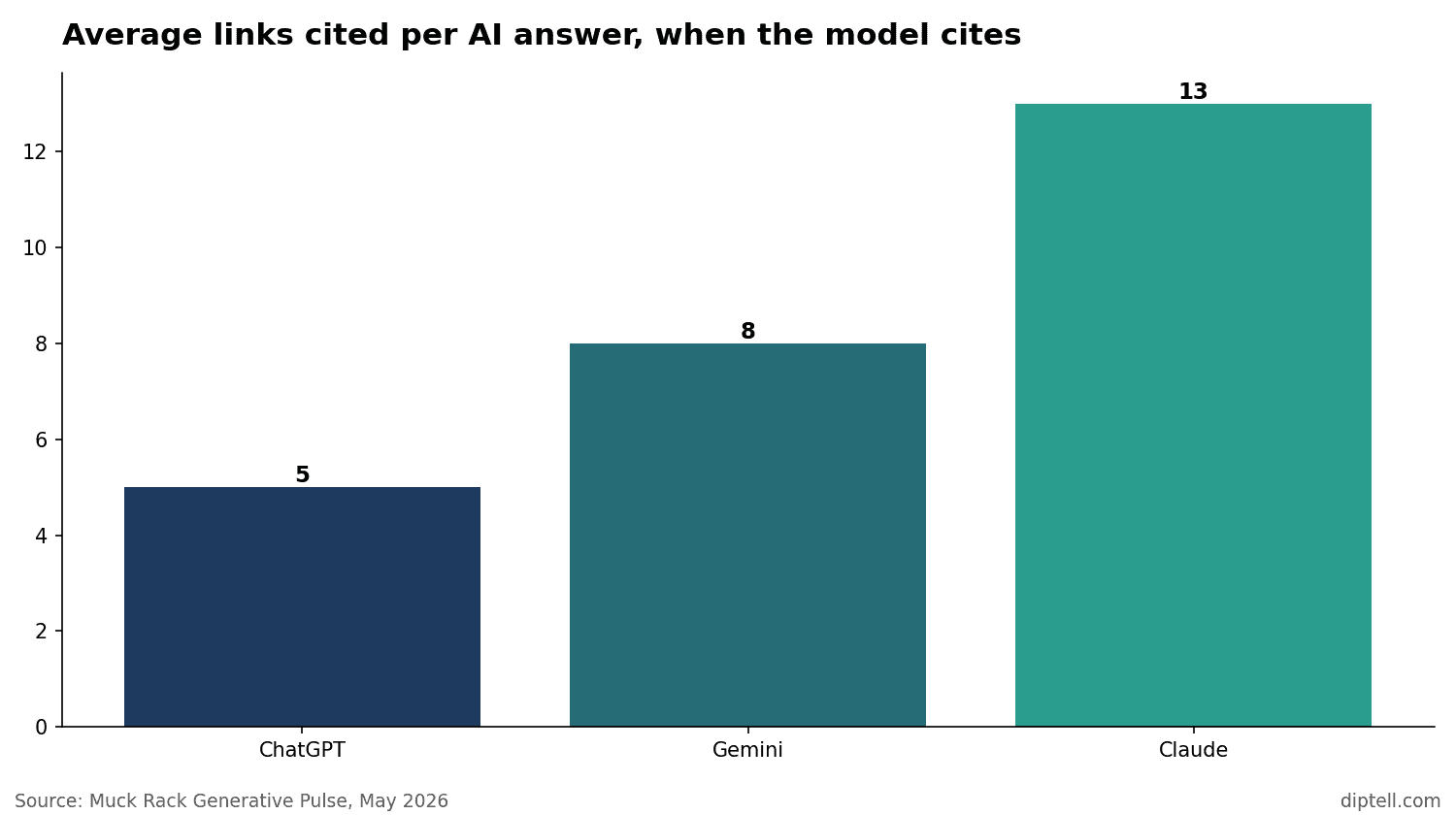
Figure 2: Average links cited per AI answer, when the model cites. Source: Muck Rack
Citation habits by platform
ChatGPT cites sources in 96% of responses with about 5 links each, Gemini in 82% with 8, and Claude in 55% with 13. Each assistant has its own habits, so visibility in one does not guarantee visibility in the others. (Muck Rack, May 2026)
88% of Google AI summaries cited three or more sources, and the median summary was 67 words long. Short answers built from several sources leave room for a brand that appears across more than one outlet. (Pew Research Center, July 2025)
Some LLMs cite pages ranking in organic positions 1 to 5 more often than pages in positions 6 to 20. Classic rankings still feed part of the AI layer, so SEO and PR work best together. (Semrush, June 2025)
Platform reach
ChatGPT reached 900 million weekly active users and 50 million paying subscribers in February 2026. This is a company-reported figure, but the scale explains why AI answers now matter as much as rankings. (TechCrunch, February 2026)
Google’s AI Mode passed 1 billion monthly active users after expanding globally in October 2025. AI answers now sit inside the world’s largest search engine, not only in standalone chat apps. (Google, July 2026)
The Gemini app reached 950 million monthly active users, with daily active users tripling in a year. Gemini is now a mass-market answer engine, so citation habits on Google’s side carry growing weight. (Google, July 2026)
Generative AI platforms averaged 9.5 billion web visits a month between June 2025 and May 2026, up 70% year over year. Usage is still compounding, which means the share of decisions shaped by AI answers keeps growing. (Similarweb, June 2026)
Unique visitors to generative AI platforms grew 57% to 655 million. Visits are growing faster than visitors, a sign that existing users are building AI into their routines. (Similarweb, June 2026)
Where AI referrals come from
ChatGPT drives 87.4% of all AI referral traffic across 10 industries. For clicks, ChatGPT is still the channel that matters most, even as its share of usage shrinks. (Conductor, November 2025)
ChatGPT held 84.7% of AI search referrals in BrightEdge’s January 2026 index. Two independent datasets agree that ChatGPT sends the large majority of AI clicks. (BrightEdge, January 2026)
All AI platforms combined held about 0.3% of total search referral market share. AI is still a sliver of referral traffic, so its value is influence before the click rather than volume. (BrightEdge, January 2026)
Google still held more than 90% of search referral share into January 2026. Search remains the main traffic engine, so AI visibility adds to SEO rather than replacing it. (BrightEdge, January 2026)
Brand signals that predict AI visibility
Brands that are talked about get named. This section covers which signals track AI visibility, how wide the gap is between leaders and everyone else, and why coverage beats link volume. For the PR side of this picture, see our PR statistics hub.

Figure 3: Average AI Overview mentions by brand web mention quartile. Source: Ahrefs
Mentions vs links
Branded web mentions show the strongest correlation, 0.664, with brand visibility in Google AI Overviews across 75,000 brands. The study is correlational, but being talked about across the web tracks AI visibility more closely than any link metric tested. (Ahrefs, May 2025)
YouTube mentions correlate with AI visibility at about 0.737, the strongest signal in Ahrefs’ follow-up study. The pattern held across ChatGPT, AI Mode and AI Overviews, so video coverage and interviews count toward AI visibility. (Ahrefs, December 2025)
Branded web mentions correlated at 0.709 with brand appearance in Google’s AI Mode. Mentions remained a top signal a year later, across a newer AI surface. (Ahrefs, December 2025)
Branded anchor text correlated at 0.628 and branded search volume at 0.466 with AI Mode visibility. Links that name you still help, but they trail plain mentions, and demand alone explains less than coverage does. (Ahrefs, December 2025)
The visibility gap
26% of brands have zero mentions in Google AI Overviews. A quarter of brands are invisible in the answer layer, which is a gap competitors can take. (Ahrefs, May 2025)
Brands in the top 25% for web mentions average 169 AI Overview mentions, more than 10 times the 14 averaged by the next quartile. Visibility is winner-take-most: crossing into the top tier of coverage changes the outcome sharply. (Ahrefs, May 2025)
Where coverage counts
Most AI citations for any given brand come from just 20 outlets. A focused outlet list can move AI visibility more than broad coverage, but every brand’s 20 are different. (Muck Rack, December 2025)
55% of PR professionals are securing coverage in high-authority publications specifically to show up in AI answers. Practitioners already treat top-tier placements as an AI visibility tactic, not only a reputation one. (Muck Rack, July 2026)
Freshness and change statistics
AI answers favor recent material, and the landscape itself shifts in months, not years. These numbers cover how fast citations decay and how quickly the market moves.
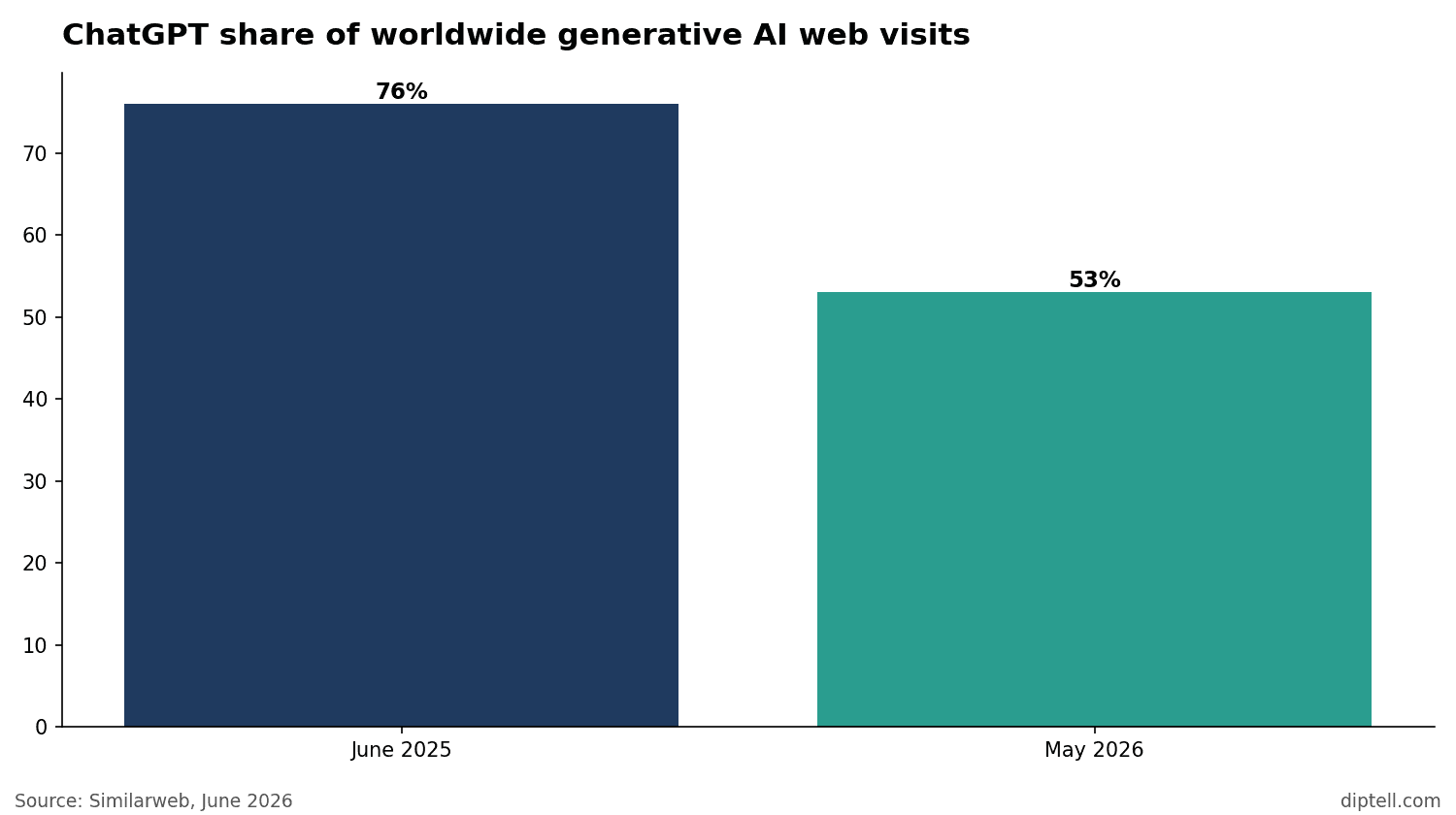
Figure 4: ChatGPT share of worldwide generative AI web visits. Source: Similarweb
Citation freshness
More than half of AI citations point to content published in the last 12 months. Coverage decays as an AI signal, so one placement a year is not enough to stay visible. (Muck Rack, December 2025)
About 4% of Claude and ChatGPT citations come from articles published in the past week, the highest concentration of any time window. Fresh coverage gets an immediate boost, which favors a steady cadence of announcements. (Muck Rack, December 2025)
Press releases grew from 1.2% to about 6% of AI citations between July and December 2025. Releases are becoming a source AI engines actually read, especially when tied to news. (Muck Rack, December 2025)
Press releases appear in AI answers to industry trend questions at 3.5 times the rate seen in best-of queries. Releases built around a trend or a data point have the best chance of being cited. (Muck Rack, May 2026)
How fast the landscape moves
ChatGPT’s share of worldwide generative AI web visits fell from about 76% in June 2025 to about 53% in May 2026. Gemini and Claude took the difference, so a single-platform visibility check now misses half the market. (Similarweb, June 2026)
Gemini climbed past a quarter of all generative AI web traffic by May 2026. Google’s assistant is now a major answer engine in its own right, not an afterthought. (Similarweb, June 2026)
AI Overviews now correlate with a 58% lower click-through rate for the top-ranking page, up from 34.5% in Ahrefs’ earlier study. The effect roughly doubled in eight months, which shows how fast the value of rankings is changing. (Ahrefs, February 2026)
51% of B2B software buyers start research with an AI chatbot more often than Google, up from 29% a year earlier. Buyer habits shifted by more than 20 points in a single year. (G2, 2026)
Google organic search traffic to more than 2,500 news sites fell 33% globally between November 2024 and November 2025, and 38% in the US. Chartbeat data reported by the Reuters Institute shows the click economy shrinking even for publishers. (Reuters Institute, June 2026)
News publishers expect traffic from search engines to fall 43% over the next three years. This is an expectation, not a measurement, but it shapes how outlets plan content and partners. (Reuters Institute, June 2026)
Gartner forecast in 2024 that traditional search engine volume would drop 25% by 2026 as AI chatbots take queries. This is a forecast; the click studies in the next section are the reality check. (Gartner, February 2024)
Clicks and traffic from AI answers
AI sends fewer clicks than search, but the visitors it sends are worth more. This section covers clicks from AI summaries, the value of being the cited source, and how AI referral traffic converts.
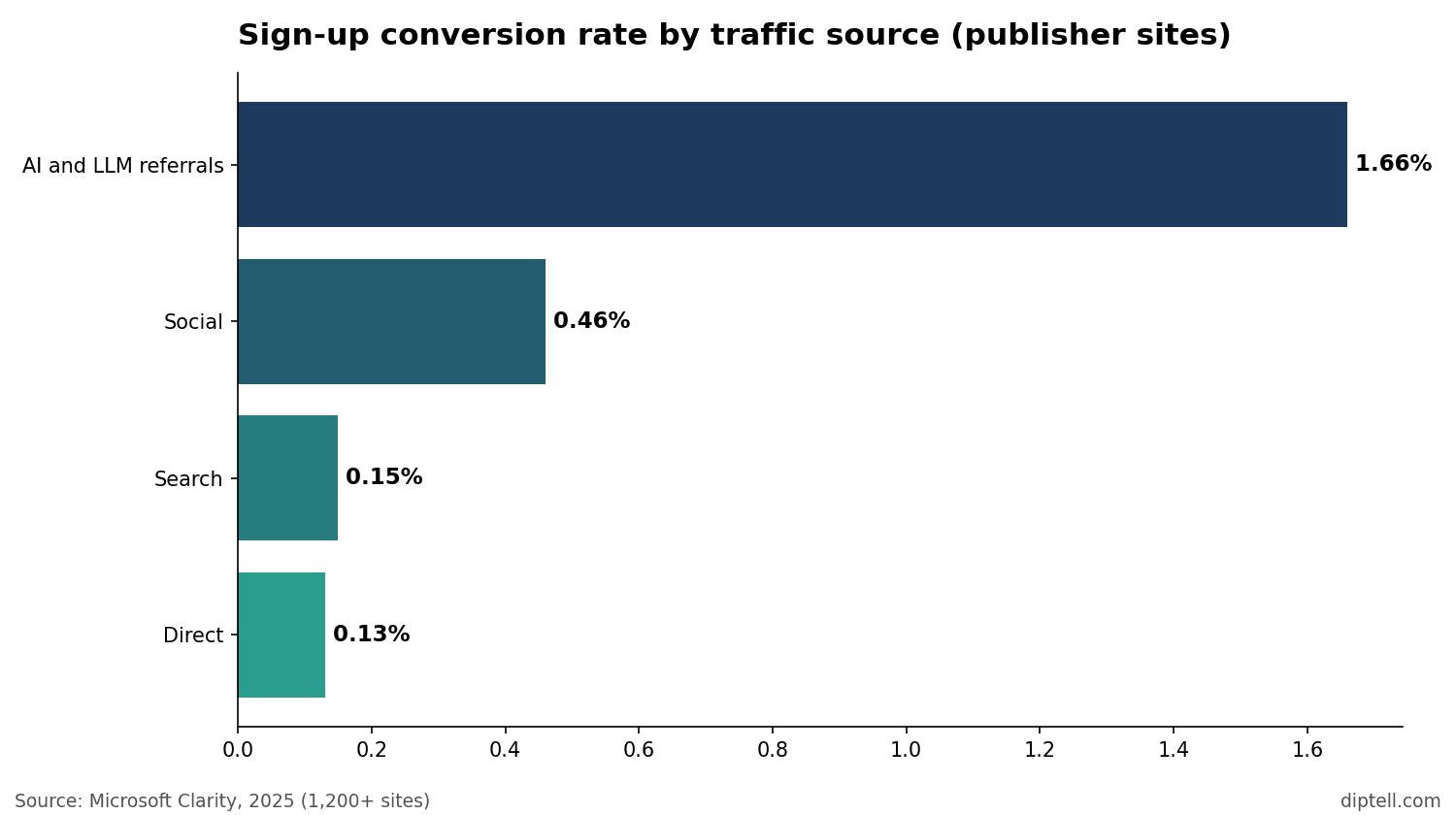
Figure 5: Sign-up conversion rate by traffic source on publisher sites. Source: Microsoft Clarity
Clicks from AI summaries
Google users clicked a traditional result in 8% of visits when an AI summary appeared, versus 15% without one. Ranking alone now earns roughly half the clicks on queries with a summary. (Pew Research Center, July 2025)
Users clicked a link inside the AI summary itself in just 1% of visits. Being cited builds awareness more than it builds traffic, so measure mentions, not only clicks. (Pew Research Center, July 2025)
Pages ranking second lost about half their clicks when an AI Overview appeared, and pages ranking tenth lost nearly 20%. The whole first page is affected, not only position one. (Ahrefs, May 2026)
Only 360 of every 1,000 US Google searches sent a click to the open web in 2024. This baseline predates the wider AI Overviews rollout, so the open-web share today is likely lower. (SparkToro, July 2024)
42% of people who use AI chatbots for news say they always or often click through to the original source. Self reported click-through may run high, but the cited outlet still gets a share of attention. (Reuters Institute, June 2026)
The value of being cited
Brands cited in Google AI Overviews earned 35% more organic clicks and 91% more paid clicks than brands left out. The study is correlational, but the cited position is the only one in the overview that still pulls traffic. (Seer Interactive, September 2025)
Organic click-through on queries with an AI Overview fell from 1.76% to 0.61%, a 61% drop. Seer’s data covers 3,119 informational queries, so commercial queries may behave differently. (Seer Interactive, September 2025)
Paid click-through on queries with an AI Overview fell 68% over the same period. Buying the top ad slot does not escape the effect. (Seer Interactive, September 2025)
Organic click-through fell 41% even on queries without an AI Overview. Attention is moving to AI assistants and social platforms, not only to the overview. (Seer Interactive, September 2025)
The average visitor from an LLM is worth 4.4 times the average traditional organic search visitor, based on conversion rates. Small AI traffic volumes can still carry outsized revenue. (Semrush, June 2025)
Semrush projects AI search visitors could overtake traditional organic search visitors for digital marketing topics by early 2028. This is a projection, not a measurement, but it sets the planning horizon for marketing teams. (Semrush, June 2025)
AI referral traffic and conversion
AI referrals account for 1.08% of all website traffic across 10 industries, growing about 1% month over month. Conductor measured 3.3 billion sessions across 13,770 domains, so the small share is a reliable baseline. (Conductor, November 2025)
AI referrals make up 1.25% of website traffic in the industrials sector. B2B categories sit above the cross-industry average, which matters for founders selling to businesses. (Conductor, November 2025)
AI and LLM referrals converted to sign-ups at 1.66%, against 0.15% for search, 0.13% for direct and 0.46% for social, across 1,200+ publisher sites. AI sends fewer visitors, but they arrive further along in their decision. (Microsoft Clarity, 2025)
52% of 1,277 publisher domains converted AI traffic into sign-ups or subscriptions within a month. Converting AI visitors is already normal, not an edge case. (Microsoft Clarity, 2025)
AI-referred traffic to US retail sites grew 62% year over year in July 2026. Adobe tracks more than a trillion retail visits, so the growth is broad rather than a few outliers. (Adobe, August 2026)
AI-referred retail visitors converted at a 60% higher rate than non-AI traffic in July 2026, up from 54% in May. A year earlier AI traffic converted worse than other channels, so the quality flip happened fast. (Adobe, August 2026)
AI-referred retail shoppers generated 53% more revenue per visit than non-AI traffic. Higher intent shows up in basket size, not only in conversion rate. (Adobe, August 2026)
AI-referred retail visitors showed 14% higher engagement and were 34% less likely to bounce in July 2026. Visitors arrive already informed, so landing pages should confirm rather than re-explain. (Adobe, August 2026)
AI traffic to US retail sites rose 693% year over year in the 2025 holiday season, and 769% in November alone. Seasonal peaks amplify the trend, so the next holiday season will likely set a new high. (Adobe, January 2026)
Shoppers arriving from generative AI assistants during the 2025 holidays were 33% less likely to leave immediately. Lower bounce confirms the visitors AI sends are pre-qualified. (Adobe, January 2026)
AI search adoption statistics
AI is now part of how consumers and business buyers research. This section covers consumer adoption, AI as a news source, and how B2B buyers use AI to build shortlists.
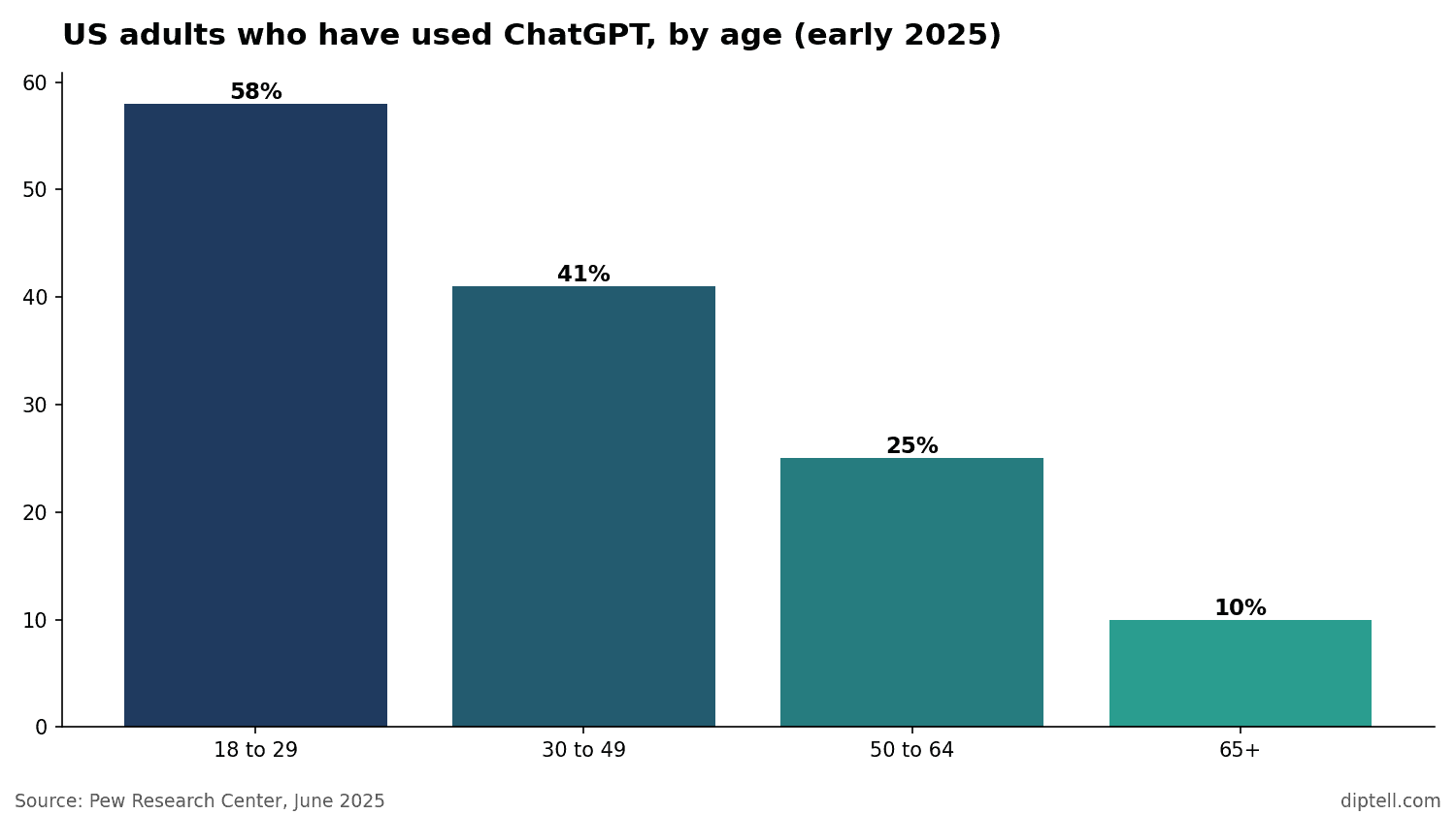
Figure 6: US adults who have used ChatGPT, by age, early 2025. Source: Pew Research Center
Consumers
34% of US adults had used ChatGPT by early 2025, about double the share in 2023. Adoption doubled in two years, and the 2026 data below shows it kept climbing. (Pew Research Center, June 2025)
58% of adults under 30 had used ChatGPT, against 41% of 30 to 49 year olds, 25% of 50 to 64 year olds and 10% of those 65 and older. Younger buyers adopted first, so the decision makers of the next decade are already AI-native. (Pew Research Center, June 2025)
28% of employed US adults use ChatGPT for work, up 20 points in two years. Work use is where B2B research happens, so AI answers now sit inside the buying process. (Pew Research Center, June 2025)
Majorities of US adults under 50 now use ChatGPT, according to Pew’s June 2026 survey. Mainstream adoption has arrived for the working-age population. (Pew Research Center, June 2026)
58% of people in Pew’s panel ran at least one Google search in March 2025 that produced an AI summary. Most searchers already meet AI answers without opening a chatbot. (Pew Research Center, July 2025)
10% of people use AI chatbots for news each week, up from 7% a year earlier, rising to 16% of under-35s. Growth is fast rather than explosive, but the youngest audiences are adopting first. (Reuters Institute, June 2026)
B2B buyers
71% of B2B software buyers rely on AI chatbots at some point in their research, up from about 60%. AI is now a standard research step in software buying. (G2, 2026)
85% of B2B software buyers think more highly of a vendor when an AI chatbot mentions it in a recommendation. An AI mention works like a third-party endorsement at the moment of choice. (G2, 2026)
53% of buyers say research with AI chatbots is more productive than traditional search, up from 36% seven months earlier. Buyers prefer the faster path, so being absent from AI answers costs consideration. (G2, 2026)
93% of B2B software buyers say AI chatbots have fundamentally changed how they conduct research. The change is near universal among buyers, even if AI does not replace the whole process. (G2, 2026)
86% of B2B buyers increased their use of AI chatbots for software research in the past year. Usage is deepening, not just spreading. (G2, 2026)
Generative AI chatbots were the top source influencing vendor shortlists at 17.1%, ahead of software review sites at 15.1%. AI answers now outrank review sites as the first shortlist builder. (G2, 2025)
79% of software buyers said AI search had changed how they conduct research. By 2025 most buyers had already changed habits, before the 2026 jump in AI-first research. (G2, 2025)
94% of business buyers use AI in their buying process, up 5 points from 89% a year earlier. Near-universal use means the question is no longer whether buyers use AI, but what it says about you. (Forrester, 2026)
61% of business buyers use private AI tools provided by their organization. Company-supplied AI tools make AI research a sanctioned part of procurement. (Forrester, 2026)
94% of B2B buying groups ranked their preferred vendors before first contact with sales. The decision is mostly made before a vendor knows a buyer exists, which is where AI answers and coverage do their work. (6sense, November 2025)
Average B2B buying cycles shortened from about 11 months in 2024 to 10 months in 2025. Faster cycles leave less time to get on the shortlist once research starts. (6sense, November 2025)
How buyers check AI answers
72% of B2B technology buyers encountered Google AI Overviews during research, and 90% clicked through to the cited sources. Buyers verify what AI says, so the outlets it cites become the proof they read. (TrustRadius, April 2025)
In 2024, 68% of buyers said generative AI had no impact on their buying process. Within a year, AI went from irrelevant to central for most B2B buyers. (TrustRadius, April 2025)
63% of B2B buyers used AI in their buying process in 2026, and 94% of those fact-checked what it told them. AI shapes the shortlist, while credible third-party sources settle the decision. (TrustRadius, July 2026)
72% of buyers always or very often fact-check AI outputs, up from 58% a year earlier. Verification is rising with usage, which raises the value of being cited by trusted publications. (TrustRadius, July 2026)
54% of buyers say AI made their research easier, up from 40% in 2025. Satisfaction is climbing, so AI research habits are likely to stick. (TrustRadius, July 2026)
47% of B2B buyers trust online resources less than they did a year earlier. Generic content is losing credibility, which raises the value of independent publications. (TrustRadius, July 2026)
AI Overviews reached 84% of buyers in APAC during research, against 59% in EMEA, where the rollout came later. Exposure follows rollout timing, so regional visibility gaps are temporary. (TrustRadius, April 2025)
Only 7% of B2B technology buyers reported using LLMs such as ChatGPT in their buying process in early 2025. Compare that with G2 and Forrester’s 2026 figures above to see how fast the shift happened. (TrustRadius, April 2025)
Who owns AI visibility
Most companies agree AI visibility matters, but few have budget, ownership or measurement in place. This section covers spend and readiness, and who is responsible.
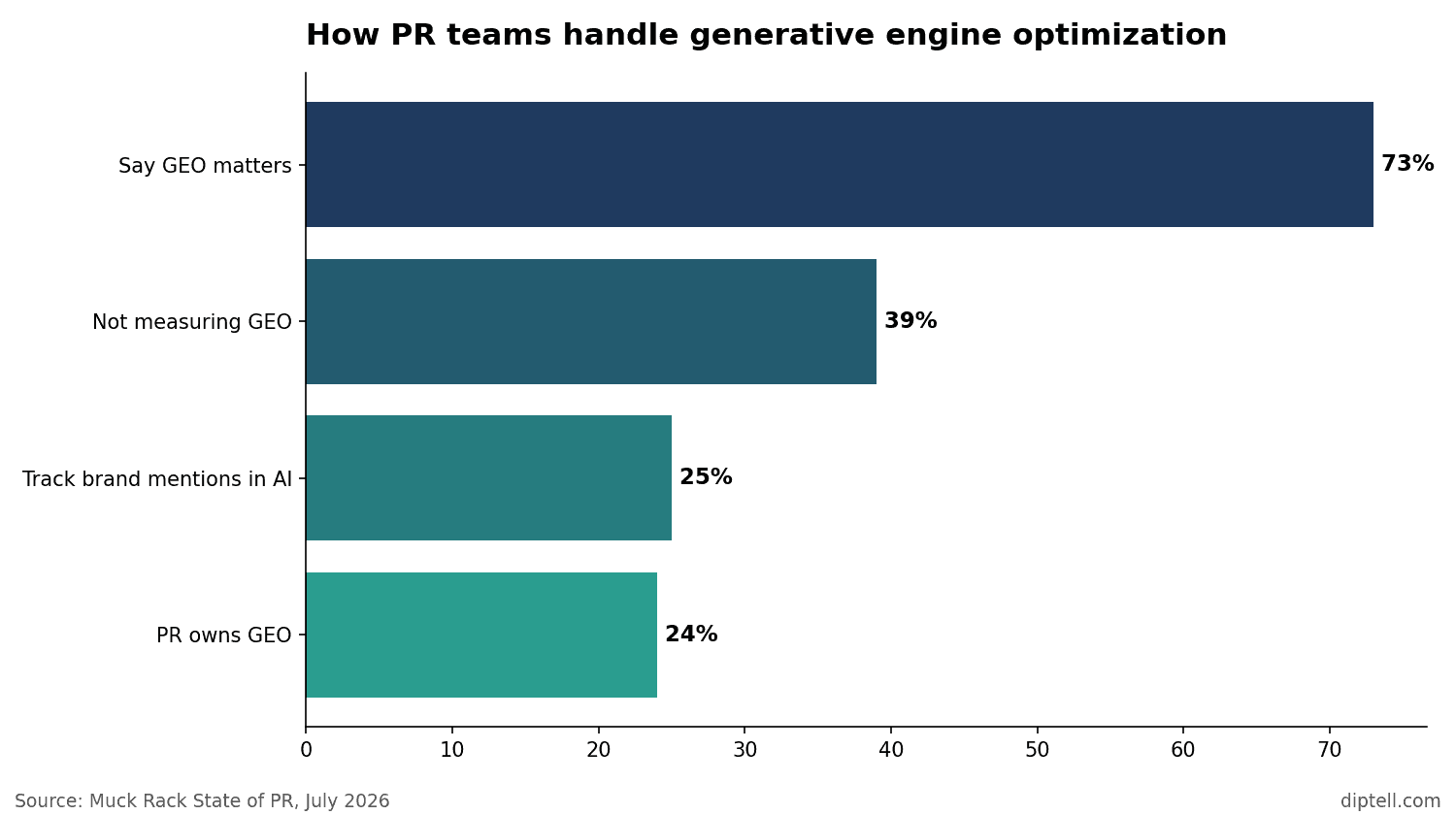
Figure 7: How PR teams handle generative engine optimization. Source: Muck Rack
Budgets and readiness
CMOs allocate an average of 15.3% of marketing budgets to AI initiatives. AI has a real budget line now, so the question is how much of it buys visibility rather than tools. (Gartner, May 2026)
Only 30% of CMOs say their organizations are ready to scale AI capabilities. Most teams are spending ahead of their ability to execute, which favors packaged, done-for-you work. (Gartner, May 2026)
70% of CMOs call becoming an AI leader a critical goal for 2026. Ambition is near universal, so visible proof of AI presence carries weight with leadership. (Gartner, May 2026)
56% of CMOs say their marketing organization lacks the budget to deliver its 2026 strategy. Tight budgets push teams toward tactics with clear, countable outcomes. (Gartner, May 2026)
AI-ready marketing organizations allocate 21.3% of their budgets to AI initiatives, against the 15.3% average. The leaders are already spending more, which widens the visibility gap over time. (Gartner, May 2026)
65% of enterprise marketing leaders dedicate at least 25% of their 2026 budget to AI search optimization. Large companies are already shifting real money toward AI visibility. (Branch, 2026)
28% of enterprise marketing leaders allocate more than half of their marketing budget to AI search. A meaningful minority is betting the majority of spend on the answer layer. (Branch, 2026)
89% of enterprise marketing leaders said AI-powered search and LLM platforms improved their marketing performance in 2025. The investment is following results, not only hype. (Branch, 2026)
87% of enterprise leaders expect AI platforms to close sales in 2026. Leaders expect AI to move from discovery into the transaction itself. (Branch, 2026)
40% of financial services marketing leaders commit a majority of their budget to AI search visibility, 2.5 times the rate in retail and ecommerce. Regulated, high-consideration categories are moving first. (Branch, 2026)
Ownership and measurement
73% of PR professionals say generative engine optimization matters at least somewhat to their strategy, yet 29% say nobody owns it. AI visibility is recognized as important but still sits between PR, SEO and marketing. (Muck Rack, July 2026)
39% of PR professionals are not measuring GEO at all, and 25% track brand mentions in AI answers. Most teams cannot yet show whether their coverage changes what AI says about them. (Muck Rack, July 2026)
PR and communications teams own GEO at 24% of organizations, ahead of SEO or content teams at 15%. AI visibility is landing with PR more often than with SEO, which shifts budget toward earned media. (Muck Rack, July 2026)
What these AI citation statistics mean in practice
The data points to four moves for founders who want to show up in AI answers.
Earn mentions, not just links
Branded mentions and YouTube coverage track AI visibility more closely than backlinks. Interviews, features and placements that name you do more for the answer layer than link volume alone.
Keep a steady cadence
More than half of AI citations come from the last 12 months, and the past week gets a spike. A placement every month beats one big launch a year. That rhythm is what a flat-priced placement package is built for.
Fix the pages AI reads about you
For local and factual questions, AI cites your own website and listings heavily. Keep product, pricing and company facts accurate and consistent everywhere they appear.
Measure mentions, not only clicks
AI referrals are about 1% of traffic but convert far better. Track whether ChatGPT, Gemini and Google AI name you for your category, alongside referral conversions.
FAQ
What do AI engines cite most?
Earned media accounts for 84% of AI citations across ChatGPT, Claude and Gemini, and paid content for 0.3% (Muck Rack, May 2026). For local and factual queries, Yext found 86% of citations come from brand-managed sources such as websites and listings (Yext, October 2025).
What predicts whether AI mentions a brand?
Branded web mentions correlated 0.664 with AI Overview visibility across 75,000 brands (Ahrefs, May 2025), and YouTube mentions about 0.737 across ChatGPT, AI Mode and AI Overviews (Ahrefs, December 2025).
How much traffic does AI send to websites?
AI referrals are 1.08% of website traffic across 10 industries, and 87.4% of that comes from ChatGPT (Conductor, November 2025).
Does AI traffic convert better than search?
On 1,200+ publisher sites, AI referrals converted to sign-ups at 1.66% against 0.15% for search (Microsoft Clarity, 2025), and AI-referred retail visitors converted 60% better than non-AI traffic in July 2026 (Adobe, August 2026).
How many B2B buyers use AI to research vendors?
51% of B2B software buyers start research with an AI chatbot more often than Google (G2, 2026), and 94% of business buyers use AI somewhere in the buying process (Forrester, 2026).
Methodology and sources
About 170 candidate figures were checked against their original publishers and 100 were kept. Figures found on roundup pages were traced back to the organization that collected them, and anything without a reachable primary page was left out, including widely quoted Cloudflare crawl ratios that circulate in conflicting versions. Unlike samples were never averaged; vendor studies are named as vendor data, and projections and correlations are labeled as such. Citation dates reflect the original publication. Every source was checked on 21 and 22 October 2026.
Sources
Muck Rack Generative Pulse (May 2026)
Muck Rack What Is AI Reading (Dec 2025)
Muck Rack State of PR 2026
Ahrefs AI Overview brand visibility study (2025)
Ahrefs brand visibility in ChatGPT, AI Mode and AI Overviews (Dec 2025)
Ahrefs AI Overviews click study update (Feb 2026)
Ahrefs via Business Wire (May 2026)
Semrush AI search traffic study (Jun 2025)
Adobe AI Traffic Trends Report (Aug 2026)
Adobe 2025 holiday AI traffic (Jan 2026)
BrightEdge AI Market Pulse (Jan 2026)
Conductor 2026 AEO and GEO Benchmarks
Conductor industrials benchmarks
G2 Answer Economy research (2026)
G2 2025 Buyer Behavior Report
6sense 2025 Buyer Experience Report
Forrester on B2B buyers and AI (2026)
Pew Research Center ChatGPT use (Jun 2025)
Pew Research Center Americans and AI (Jun 2026)
Pew Research Center AI summaries and clicks (Jul 2025)
Microsoft Clarity AI traffic study (2025)
Yext AI citations study (Oct 2025)
TrustRadius Bridging the Trust Gap (2025)
TrustRadius 2026 B2B Buying Disconnect, via HG Insights
Google Q2 2026 earnings remarks
Gartner 2026 CMO Spend Survey
Branch 2026 AI search enterprise benchmark
Similarweb 2026 Generative AI Landscape
Seer Interactive AIO CTR study (Sep 2025)
Reuters Institute Digital News Report 2026
G2 2026 AI search insight report
Gartner search volume forecast (Feb 2024)
SparkToro 2024 zero-click study
TechCrunch on ChatGPT users (Feb 2026)
Cite this page
Diptell, “100+ AI citation statistics for 2026,” October 2026, https://diptell.com/ai-citation-statistics/.


